This is a story about the adventures of a
man named Candide who grows up in the German castle of Westphalia. He is sensible and bright,
taking to the philosophy of Pangloss, a philosopher who believes that all things happen for good. Candide gets run out of Westphalia by the
Baron after expressing a romantic interest the beautiful Cunegonde, the Baron's daughter.
Still, Candide is determined to reunite with her some day. After joining the Bulgarian army, Candide
again runs, but meets Pangloss, who is disfigured and sickly.
Pangloss tells Candide that Westphalia
was attacked and that everyone died. The two of them travel to Portugal with the aid of
a friendly man, who dies in a terrible storm at sea. After surviving an earthquake, Candide and
Pangloss are convicted and each sentenced: Candide to be whipped and shot, Pangloss to
be hanged. Pangloss is hanged, but Candide is saved by an old woman, who heals his wounds.
The old woman takes Candide to Cunegonde,
who survived the attack on Westphalia, and explains how she is now the property of two
other men. Candide slays the two men who own Cunegonde
and he takes her and the old woman to the New World to escape persecution. As they are
sailing, the old woman shares her own journey from princess to slave. When they arrive in the New World, the local
governor sees Cunegonde and wants to marry her.
But before Candide can protest, he sees
a ship arrive whose intentions are to arrest him for the slayings. Candide leaves with a local guide, Cacambo,
and they find refuge in a nearby settlement. There, Candide discovers that Cunegonde's
brother is a commanding officer, having also survived the attack on Westphalia. However,
the men fight and Candide stabs Cunegonde's brother before fleeing.
Candide and Cacambo then find a city of gold,
El Dorado. Although the city is full of riches, the people live in peace and harmony. Candide
and Cacambo enjoy their time in the city, but decide to take some of the riches with
them to buy back Cunegonde. However, on their trip back, they lose most of their gold-carrying
sheep and are forced to leave the riches behind.
Candide decides to split off from Cacambo,
instructing him to take most of the gold, buy Cunegonde, and meet him in Venice. After his gold is stolen by a Dutch sea captain,
Candide decides to travel to France with Martin, a philosophical man who believes the worst
in mankind. In France, Candide and Martin run into Cacambo,
who is now a slave to a former sultan. Cacambo tells them that Cunegonde is a slave in Constantinople
and has grown ugly.
Still, Candide is determined to see her. As they are sailing to Constantinople, the
group discovers that Cunegonde's brother and Pangloss are rowing the boat. They land in Constantinople and Candide sees
Cunegonde, ugly and beaten, and the old woman. He buys them, still wanting to marry Cunegonde.
In the end, Candide buys a small Turkish farm
with the rest of his money and they all live on the farm together. Initially, readers should be able to identify
the author's use of satire as social commentary on money, relationships, slavery, and the
evilness in people. Yet the strongest satire is saved for religious commentary. In the
story, religious figures are often portrayed as hypocrites who display acts of lust, greed,
and selfishness.
This story also portrays the incomplete story.
Often, readers are led to believe that characters have died, but in fact, those characters survive
and return by the end. This demonstrates the survivability of humans as organisms, but
also an exciting literary device: the limited narrator. What this does is limit the reader's
knowledge of the world and create new surprises that the reader and main protagonist share
together. Through all of Candide's misadventures, his
belief that everything works for good acts as a strong constant.
This philosophy, in
a way, is mocked by the author as Candide takes it to extremes in some cases. This ultimately leads to the conclusion of
the story where Candide realizes that, in the end, it doesn't really matter whether
events, good or bad, work out. Ultimately, we, as humans, are meant to work and experience,
not to think or judge whether our experiences are for the benefit of ourselves and those
around us..
- Mahalo, book nerds. I'm Jon Gabrus, and this
is Blazed Book Reviews. Yeah, I read. (Classical music) (water bong bubbling) My guest today is Nate Dern, author of Not Quite a Genius.
(Rock music) - Alright, thanks for having me. - Dude, don't you love books, man? Hey, have you ever read this book? - Ishmael by Daniel Quinn? Yes, I read that in high school. - Sick, dude. Gorillas teaching people stuff, people learning from gorillas and stuff? - It's pretty wild.
- [John] Yeah. It's pretty dope right? - I thought we were gonna
be talking about my book. - This is a new book, right? - Yeah.
- Yeah so, maybe the read-- you know, my watchers haven't read it. - I guess probably not.
- No. So there you go. But have you guys read this? - [Crowd Voiceover] Totally. Yeah.
Book. - This is sick. Me and Nate Dern, author of Not Quite a Genius highly recommend Ishmael. Alright, enough of this book bullshit.
It's time for Weed Pairings. (Upbeat pop music) For this week's Weed Pairing, I sought out a strain that would pair well with Not Quite a Genius by Nate Dern, and I found that strain in Sour Diesel. Sour Diesel! Or as I call it, Sour D. It's got a pungent, gasoline-like aroma, and its cerebral high? It is perfect for the
absurd and dark humor found in this book.
Now, I wouldn't smoke an Indica
before reading this book, because you might fall asleep. - That's not nice. - No no no, it's not a dig on your book. That's what Indica does.
Remember kids, Indica equals Into Couch. - Kids probably shouldn't be smoking any type of marijuana, right?
- Or reading. - Or reading? - This has been Weed Pairings. (Upbeat pop music) Thought experiment.
If you press this button, your book becomes a New York
Times number one Best Seller, but someone somewhere dies. Do you push it? - No. (Laser blasting)
Whoa. - A person died anyway.
And your book is not number one. - Oh, that's awful. - Shit. What if I died? - You didn't, though.
- Who knows? I could be dead already. Elon Musk. - What about him? - Not sure. He's the future car guy? - Yeah, Tesla.
- Tesla.
(Funky music) Alright this challenge is Stream of Consciousness. We have five hours to write whatever you want on this piece of paper. - Five hours? - Let's make it a minute.
- Okay. - Let the clock start now.
(Silly time passing music) Time. I'll read yours first. - Oh my gosh. - Here, just pass me your whole pad.
- Alright. (Clears throat) Oh good, sloppy handwriting. "I am talking to a high person. "But I myself am not high.
"This reminds me of every
party I went to in high school. "I did not smoke then "because I was on the cross country team." - It's true. And I ran out of time. - Oh.
(Laughs) Okay. "Two german shepherds having sex." - Sick, right? - That's all you wrote. - Yeah, well, we only had a minute. (Sexy saxophone music) This has been Blazed Book Reviews.
I'm Jon Gabrus. Come back for next week's episode where I interview J. R. Tolkien.
- So thanks again for having me on. I appreciate it. Are you fake talking? You're fake talking because
it's the end credits? I think we can really talk. Maybe it was a mistake to be on this.
It's pretty early in the morning and you're already so high. (Soothing guitar music).
This is a story about a dog named Buck who
lives on a beautiful estate in California, but is sold off as a sled dog. After being badly beaten by a dog trainer,
Buck is used to pull mail in the Arctic. Although the work is tough, he learns quickly and soon
takes over the sled team by killing the previous leader. The dog team is sold off to different sled
drivers and nearly worked to death.
They are in need of rest, but because of mismanagement,
the strength of the dogs gets drained out of them until they are killed off one by one.
Fortunately, Buck is saved by a man named John Thornton, a kind man with a heart for
animals. John takes in Buck and helps him recover.
Buck, having been mistreated by others in the past, is apprehensive at first, but then
grows to love John. In fact, Buck pulls a 1,000 pound sled to win John a bet. John takes Buck and the rest of his dogs into
the back country, searching for a mythical Lost Cabin.
During this search, Buck wanders
into the forest by himself and meets a wild wolf, which sparks a primal instinct within
him. One night, after returning from the forest,
Buck sees that John has been killed by a group of local Indians. In the end, with nowhere else to go, Buck
integrates into the local wolf pack, becoming a part of local Indian mythology. First, this story discusses the relationship
between domestic and primal instincts.
Buck is introduced as a soft dog, living a luxurious
life on the grounds of a mansion. But when he is taken and placed in the wild with other
dogs, something within him changes. Yet, these changes are not foreign to him. It's like
these instincts are already a part of him, just unearthed.
And what makes this more relatable to readers,
who don't necessary experience that call of the wild in our highly modernized society,
is how these primal instincts may have more to do with morality than grunts and cavemen
drawings. The story suggests that often to survive,
moral nature must die. As Buck tries to assimilate to his new outdoor lifestyle, he is timid
and almost polite, to the point where the other dogs eat his food. However, he soon
learns to steal food to survive.
In fact, he learns that it is easier to steal than
not to steal. But why would readers enjoy a story about
non-talking dogs? It's because of the applicability of the story to humans through the style of
writing. As written, readers are placed in the head of dog, trying to understand the
sled dog culture. And as the story goes on, readers discover
how humanized Buck's personality is.
Buck is relatable as a character. Any person who
has worked in a job that they didn't necessarily want can understand the struggles Buck goes
through in this story. It's a frustration derived by helplessness, anger, and fear,
all human emotions, yet felt by a dog and projected to a level of relatability..
This is a story about a boy named Jessie who
lives with his family in the countryside. He likes to draw and has been training all
summer to be the fastest runner in school. The Burke family moves in next door. Their
daughter, Leslie, is creative and smart and becomes Jessie's classmate.
When the big day of the race arrives at school,
however, Jessie gets beaten by Leslie. And at first, no one likes Leslie, but because
they are neighbors, they become friends. Jessie and Leslie begin to form a real friendship
around an imaginary land they call Terabithia. By swinging across the creek on a rope swing,
they enter a world where they are king and queen and go on numerous adventures.
It starts to rain, making it unsafe to travel
across the creek, but they continue to travel to Terabithia anyway. Jessie is invited to go to a museum with his
music teacher that he likes and has a great time. However, when he returns, he discovers
that Leslie had died in the creek. Jessie is shocked by all of this.
Leslie's
family moves away and Jessie uses some of their extra lumber to build a bridge across
the creek so that no one will ever fall again. Despite portraying the power of imagination
and the innocence of childhood, this is not really a children's book as it touches upon
various adult-related themes and challenges many of the social conventions established
in society. First of all, it displays unusual relationships
that children may not understand. Of course, by that fact alone, it does not make the book
false or bad, just, shall we say, unique.
For example, the relationship between Jessie
and the music teacher is strange. Jessie is attracted to the teacher and the way the story
is written, it seems that the teacher is attracted to Jessie. Maybe that's just how a boy his
age would think, but still, this can confuse a child. And while Jessie is at the age where opposite
sex attraction is normal, it does make readers wonder why he isn't infatuated with Leslie
a girl his own age, if that was the character trait that the author wanted to highlight? Another unusual relationship is between Leslie
and her parents.
They insist that she call them by their first names and they don't seem
to be parents in the conventional definition as much as they are her peers. These unusual relationships challenges the
reader's view on what real world relationships are like. Perhaps the author wanted to let
children know that they aren't the only ones who experience or see these types of relationships. This story also talks about spirituality,
both in the religious aspect and the more secular one.
Leslie goes to Easter service
with Jessie's family and after, asks about God. And while her questions are not provoking,
they do tear at paradoxes surrounding the Christian faith, like God's wrath and how
a loving God could also damn His children to hell. And of course, there is death. One of the
main characters in the story dies.
How is a child supposed to react to this? I mean,
really? How do children react to the death of someone they know? There doesn't seem to
be a real answer presented to us from the author, but maybe the lack of an answer through
Jessie's struggles to come to understand his situation is relatable enough for children. Many of these adult topics can fly over the
heads of children, but nevertheless, they are still there. We have adult-child romantic relationships,
child abuse, sibling abuse, religion, sexual curiosity, and unconventional parenting all
wrapped up within a story about a kid who likes to draw. Oh, and his best friend dies..
This is a quick summary of Brave New World
by Aldous Huxley and why I think this book and this train track are similar. This is a story about a world where people
are born in test tubes with their lives being predestined into social classes. There are
no such things as mothers, fathers, children, and other social relationships, and all of
the essential human needs are provided for through mandatory or fabricated social experiences. The highest social class, Alphas, are the
most intelligent and enjoy more of life, while the lower classes, which are genetically stunted
in a lab, perform the society's lesser tasks.
Each generation of children is created in
batches through cloning and suggestive conditioning to further secure their future social status. Bernard, a government psychologist in London,
is an Alpha, but he's physically small and doesn't like the artificial social aspects
of the society, such as free sex and soma, a drug that makes people feel drunkenly good. As a psychologist, Bernard is sent to New
Mexico to study a "savage" reservation, a place where the "old" society still exists.
He brings along Lenina, a young and beautiful woman, and the two of them enter the reservation.
There, Bernard discovers Linda, a woman who grew up in London, but was abandoned in the
reservation several years earlier. It is also discovered that Linda had a son, John.
This is problematic because the father is
Bernard's boss, the Director of Hatcheries and Conditioning, and procreation through
natural means is something that Bernard's society doesn't recognize. Despite that, Bernard
decides to bring back Linda and John to London. Bernard, who is normally quiet, becomes outgoing,
as his fame for bringing back John, "The Savage", grows. However, after John fails to show up
to a social gathering, his social status returns to one of an outcast.
After the death of his mother, John realizes
that something is wrong with the society. He draws the attention of the Controller,
the regional leader of Western Europe, and John and the Controller talk. The Controller explains how and why things
are the way they are. That the coexistence of truth and happiness is a balancing act
and that they have chosen a life of extreme happiness with very little truth.
Bernard is sent away to an island with other
free thinking people like himself and John decides to move away into the countryside
to live on his own. In the end, John hangs himself out of shame
after being made a spectacle. As always, a lot can be said about this story,
but what draws my interest and attention is the idea of predisposing individuals for a
certain path before they are even born, like placing them on a train track. In the story,
we learn that the batches of lower level individuals learn early what is comfortable to them so
when they grow up and have to do menial tasks, they aren't upset since they have been conditioned
to think that what they are doing is good.
In other words, a social ceiling has been
created for them. And what's interesting is that the same thing
could be happening today. For example, if an individual is brought up in a high class
social network, that individual is set on a track to continue to be in that high social
network. Likewise, an individual who is brought up in a poor social network is also predisposed
to remain in that network.
Of course, these tracks aren't binding and there is always
the possibility for varied deviations, but for the most part, environment heavily influences
the type of person someone becomes and what choices they will make. What's exciting to see are individuals, through
their own talents or luck, who change their social circumstances and assimilate themselves
into different social networks. In essence, they are changing the direction of their tracks
and ending up in new destinations. After hearing my comparison, what item do
you associate with this book? Let me know by leaving a comment.
Don't forget to subscribe for more Minute
Book Reports and thanks for watching..
Hi everyone today I'm here to talk about "Born a Crime" which is a memoir by Trevor Noah. You might have heard of Trevor Noah from his late-night talk show and as a stand-up comedian. I personally didn't know very much about him going into this book which is fine, I think, because A.) You learn a lot about him in the book and B.) Nothing that he talks about is contingent on you knowing things about him. In fact i really enjoyed learning about him and kind of meeting him and understanding his point of view and where he came from through listening to this book, which i will say, i listened to the audiobook and i would highly recommend it.
I'll talk about the narration and everything I liked about the book after a brief synopsis. So Trevor Noah is, like I said, a late-night talk show host and comedian. He was born in south africa in the years of the apartheid, and he was born from a black mom and a white dad, which at the time of his birth was literally a crime. People between races were not allowed to have relationships, and so he was born a mixed-race child in apartheid South Africa, which was a crime.
So he was a very unusual child in the sense that he was one-of-a-kind pretty much everywhere he went. It was not something that people saw a lot, so he stood out, and he talks about that how it affected him growing up, kind of being set apart from everyone, and how that made him sometimes popular and sometimes very unpopular. In the book he talks about stories from his childhood and jumps around a lot. He talks about his mother and their relationship, which is really close, and them going to church together, and about his father and his future stepfather and those kind of male relationships.
He talks about the friends he makes, about how he tries to fit in at school; it covers a wide range of topics and a lot of experiences of his life. So talking about the narration-- I listened to the audiobook and i can't recommend it enough. He is one of the most effortless and casual narrators. I love when celebrities or any memoir writer read their own book because obviously it's their story, having them tell it themselves just adds another layer of sort of intimacy.
But also no one can really read the story like they've written it themselves, so it's nice to listen to him read it to you. It really felt like just sitting down and someone telling you their life. But on top of that, not only do you get his life experiences and these events he's relying to you, but he also weaves in a lot of history and kind of cultural and political information about South Africa before and after the apartheid, which I found fascinating. Because i really don't know much about that time period.
Obviously most people know about it and have heard of it and nelson mandela and all these big kind of broader themes and looking at it from sort of the lens of history. But I found it really interesting to hear about these things through the lens of a person living in it, especially a person from such a unique perspective. Since he is a comedian i also found it to be very funny. I was laughing from like the first chapter on.
Even in the darkest moments of the story when he's talking about really difficult things, issues of racism or struggling with the relationship with his stepfather who was very abusive, all of these things-- in the funny moments and in the dark moments-- he is able to find humor and relay that in a very natural way. I think sometimes humor can come across very forced; when people are trying to be funny, and especially writing... So maybe listening to that elevated it. But hearing him, not tell jokes per se, but just deliver these stories in a humorous way at times, it was really enjoyable.
I was laughing out loud while listening to this in my car. And I was also like very moved by some of the more heartbreaking and scarier moments of the stories. When he's talking about being put in jail, being racially profiled things like that was really interesting to learn about and really difficult. There are some moments where it's talking about, especially his mother, and things that she tries to do as a black woman in South Africa at the time, and she's just prohibited from doing simply because of her race and gender that are like so infuriating.
And to see them through the lens of the mother's child and through a real person was so much more enlightening than just reading about it like in a newspaper or online. You hear these headlines and you see these things happening all over the world, but to be able to hear them told from someone who's lived through it, witnessed it and experience it was like such a different level of experience than just hearing about it, if that makes sense. So I got a lot more out of this book that i was expecting to. It was funny; it was heartbreaking; again his narration was just fantastic.
The only thing i didn't really love about it is that it jumped around a lot, like i said. So in one chapter he'd be in elementary school and the next he'd be a teenager. It just didn't feel thematically like there was any sort of flow, and that's fine. I mean it is called I think "stories from a South African childhood" so it's just different stories from his life.
Sometimes it was hard to jump from one time period to the other, and one chapter is talking about how he didn't have any friends and then the next chapter is talking about his best friend. So it was just kind of like confusing, but I get that they took place in different time periods. And I understand why he saved the very last chapter of this book for the end, which is really an amazing chapter. I thought that he started and ended the book on amazing notes; it got me hooked from the very beginning and it ended perfectly, and a lot of amazing moments in between with a few that were kind of like jarring, when he was talking about things that I was not expecting based on the chapter before it.
So that's my only criticism. I really like this book and again i can't recommend the audiobook enough. If you're interested in this at all I would say go the audiobook route, but if you don't like audiobooks for some reason, obviously I'm sure it'd be a great experience to read too. I just think it's a great story.
It's one of those celebrity memoirs that I feel like really holds up to more than just spilling secrets or writing about their life because they're famous. I feel like he actually has something to say with his life experiences, and more on top of that with how he talks about race and politics. So there's a lot going on in this but it never feels long. It was like eight and a half hours, which is kind of long for a celebrity memoir.
I feel like they're usually shorter than regular audio books. But eight and a half hours is a really good length for this. I would have listened to a few more hours. I thought he was really interesting and easy to listen to, like i said, and i love this book.
So if you have not read this book i can highly recommend it. If you have, let me know what you thought about it in the comments below. And i hope you guys enjoyed this video and learned something new, and I will see you in the next one. Bye!.
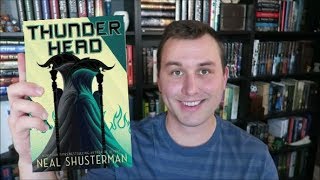
Hey! What's up, you guys? It's Connor, and
today I'm gonna be doing a book review for a Thunderhead by Neal Shusterman.
Thunderhead is the second book in the Arc of a Scythe series. In the first book... It's
called Scythe. I did a book review for that book as well, so I'll leave it
linked if you want to check it out.
Also I was sent this book by the publisher
for a sponsored video which I've already done, but this video is not sponsored.
Regardless, my thoughts and feelings are my own. I just wanted to let you guys
know that I did get this book for free. If you guys don't know, the Arc of a Scythe
series follows two characters that are living in this world where humans have
become immortal. Every time they start to age too much or age to a point that they
are no longer enjoying life, they are able to do what's called "turning the
corner," and they are turned back into a younger version of themselves.
So if they
turn 55/60 they're able to "turn the corner" and turn back into 25 or 30
year-olds if they want to. Because people never die, the population of humans
on Earth has grown exponentially, and the only way that people naturally die
anymore is if they are caught in a fire and burn to death or something similar
to that like acid or the body can't be found kind of thing. The only other way
that humans are killed is by a group of people called scythes, and scythes are
tasked with culling people. And they're supposed to do it without bias, and so
there's different quotas of different types of people that you have to kill.
There's a quota for men versus women and also different cultures and ethnicities
and colors of people.
So there's a certain number of black people that you
have to kill, and a certain number of white people, and a certain number of Asian people, etc. [This isn't technically true. You just aren't allows to be too out of balance.] And the main two characters are trying to become a part of this system. The entire world is run by one single AI system called the Thunderhead, and the Thunderhead is something that people actually really enjoy.
The
Thunderhead takes care of people, and gets them jobs, and has established a
minimum pay that everyone gets no matter what. So they don't actually have to work
if they don't want to, but most people do want to work because then life would be
very boring. And he takes care of everything on the entire Earth. There are
no governments anymore.
There's just different regions. It's the Thunderhead
and the scythedom that are running the entire world, and then this book takes
place a year after Scythe. As usual with my book reviews, I'm going to go through
my pros, go through my cons, give you my rating, and be done. My first pro for this
book is that it does take place a significant chunk of time after the
first one, so the characters have really had time to grow and change
after the events of the first book finished.
Citra has really grown into her own and has really solidified into the person
that she's gonna be.
Her morals are pretty concrete, and I really enjoyed
seeing her navigate through this world after the events of the first book. Rowan,
on the other hand, is still figuring it out,
and I really enjoyed that juxtaposition of Citra being so sure of herself... I mean
she is still young. The characters are only eighteen, but she is pretty steady
on her feet, and Rowan is trying to figure out what direction he wants to
take, kind of thing.
So I really enjoyed the fact that they've been up to things
within the past year that you're kind of catching up on as well as following them
as the plot moves along. I really enjoyed secondary characters
that were introduced as well. Grayson is such an interesting character. I really
enjoyed his point of view and his take on the world because instead of the
point of view of two characters that have been chosen to become scythe apprentices, you had a character that has nothing to do with the scythedom at
all.
He is just a normal Joe Shmoe character, and you get to see how he
views this same world. How he views the Thunderhead. How he views the scythedom. How
he views himself within society.
It was really cool to get that side of things.
Another secondary character that we get to meet is Maria, and she was super, super
interesting as well for other reasons. Honestly, the characters that Neal
Shusterman has introduced to the series in this book as well as the ones that
he's kept up with from the first book have all been very intriguing and very
engaging. I just want to know more and more about all of these characters, so I
really enjoyed that in this book. In this world, scythes are required to keep
journals, and in the first book you get journal entries from a bunch of
different scythes which from my review, a lot of people said that they did not
read those interludes.
And I think that you are missing out if you didn't read
them, but in this book instead of getting journal entries from scythes, you get
little interludes from the Thunderhead's point of view which was so awesome
because you could definitely see how the Thunderhead is viewing himself and his
role when it comes to people and how he's the caretaker of humans. But it also
follows him as he's learning that he doesn't know everything, and that upsets
him. And so you see a slow progress of the Thunderhead shifting the way that he
thinks and the way that he feels. I guess I'm saying "he," but the Thunderhead
doesn't have a gender.
This slow shift of the
Thunderhead's position and how he views itself really adds to the tension of the
book, and the tension throughout this novel is just growing, and growing, and
growing. It's the perfect amount of tension though. It's not so much so that
it gives you anxiety and you're getting stressed. It's enough tension that it keeps
you on your feet, and it keeps you reading, and reading, and reading which is
one of my favorite things that a book can do especially when there's POV
shifts.
This character ends on a cliffhanger, so you have to read the POV
of these couple characters so you can get back to that character. Bah! That it was so much fun. Another thing that I liked was just that
in this series in general it just addresses things of: who decides who dies
and who lives? Is it right for anyone to have that power? Is it right for anyone
to decide who lives and who dies? Is it even right for someone to decide when
they die? All of those concepts were things that I really was interested in
reading about, so I really loved seeing them in this novel. And the last thing
was that just the way that this book ended, I was floored.
I need the next book
right now. And Thunderhead just came out recently, so I have a very long time
until the next book comes out. But I want to know what's gonna happen next right
now! Now I'm gonna talk about a couple of my cons. I don't absolutely love when
books end on cliffhangers which is kind of what this book did.
If I have access
to the next book, it's something that I. Kind of enjoy because then I can jump
right into the next one. But with this one, I have to wait for it, so now I'm a
little bit annoyed. But that's a personal problem, and because I couldn't think of
any other cons on my own, I looked up a couple of reviews.
People have said
that they haven't appreciated the POV. Shifts in the middle of the chapter, so
from one paragraph to another sometimes it switches the character that you're
following and which character you get inside of the head of. And those people
have a hard time jumping from one person to another when it's not clearly stated.
Here it just switches from one to the other without saying it directly. You
learn pretty early on within that paragraph which character you're
following, but I can definitely see why that would be difficult for some people
to follow.
But as I said, that didn't affect my reading experience. I
absolutely loved this book. In the end, I ended up giving this book 5 stars. I
loved it.
I gave the first book four and a half stars, I believe, and this one 5
stars. So I'm just loving this series so much, and I definitely recommend it to
people that are intrigued about it check it out. So that's gonna be my review of
Thunderhead by Neal Shusterman. If you liked it, please give it a big thumbs
up and comment down below have you read this book.
Have you read Scythe, and you're
just waiting to read Thunderhead? Have you read anything by Neal Shusterman?
Anything you want me to know, leave it down below, and I will talk to you guys
next time. Bye! <Finger gun and tongue click>.
 This is a story about the adventures of a
 - Mahalo, book nerds. I'm Jon Gabrus, and this
 This is a story about a dog named Buck who
 This is a story about a boy named Jessie who
 This is a quick summary of Brave New World
 Hi everyone today I'm here to talk about "Born a Crime" which is a memoir by Trevor Noah. You might have heard of Trevor Noah from his late-night talk show and as a stand-up comedian. I personally didn't know very much about him going into this book which is fine, I think, because A.) You learn a lot about him in the book and B.) Nothing that he talks about is contingent on you knowing things about him. In fact i really enjoyed learning about him and kind of meeting him and understanding his point of view and where he came from through listening to this book, which i will say, i listened to the audiobook and i would highly recommend it.
 Hey! What's up, you guys? It's Connor, and

